Module 07
How do operations ideas become coordinated execution?
The semester produced a diagnosis. This week turns that diagnosis into scope, dates, owners, and a 10-minute story a sponsor can act on.
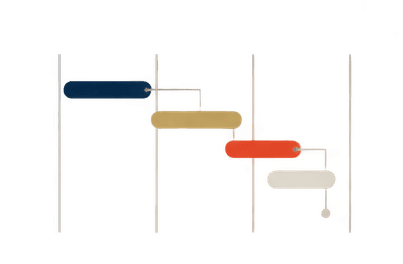
This Week
Saturday is both a case due date and the final briefing.
01
Tuesday · Oct 6
6:00–7:20 PM
Module 7 live session
One online discussion lecture: scope, WBS, milestones, critical path, risk, and the final presentation.
02
Saturday · Oct 10
due
Case Study 4: Project Management
Submit a project scope statement, Gantt chart, and milestone schedule for the consulting project.
03
Saturday · Oct 10
10+ minutes
Final presentations
Present the operations strategy. Include at least two components developed in earlier cases.
Course Roadmap
Strong operations ideas still fail without scoped execution.
01
Orientation
02
Supply Chain
03
Forecasting
04
Capacity
05
Inventory
06
Quality
07
Project
Tuesday · 6:00–7:20
One 80-minute workshop: from a failed execution story to a Case 4 plan.
6:00–6:08
Why good ideas die in execution
Take a position on a project that looked smart and still missed.
6:08–6:22
Scope statement workshop
Purpose, deliverables, boundaries, and what will not be done.
6:22–6:34
WBS and milestones
Break the work down until a team can own pieces of it.
6:34–6:48
Gantt and critical path
See sequence, duration, and the path that actually sets the finish date.
6:48–7:00
Risk and accountability
Name uncertainty and decide who is responsible for what.
7:00–7:12
Case 4 and the final presentation
Convert the semester’s analysis into a 10-minute executive story.
7:12–7:20
Close the course arc
Operations strategy becomes coordinated execution.
Learning Objectives
The output is a plan the team can run, not a prettier strategy paragraph.
Explain why strong operations ideas still fail when execution is unstructured.
Write a project scope statement that names deliverables, boundaries, and success.
Build a work breakdown and a milestone schedule a team can actually run.
Read a Gantt chart well enough to see the critical path and where slack lives.
Assign risk and accountability so work does not become everybody’s and nobody’s.
Turn the semester operations strategy into a Case 4 plan and a final presentation story.
Predict
The recommendation was smart. The organization still did not change.
Most operations strategies die in the gap between insight and coordinated work. Name the failure mode before we write a scope statement.
Take a Position
A team recommended a leaner inventory policy and a quality measure. Eight weeks later, nothing had been implemented and nobody could say who owned the next step.
What actually failed?
Learn
Daily operations keep the promise. Projects redesign the system that keeps it.
Inventory, quality, capacity, and supply-chain choices live here once the system is running.
A launch, a redesign, a relocation, or this semester’s consulting recommendation.
If the project is vague, the operating system does not actually change.
Learn
If the team cannot say what is out of scope, it does not yet have a project.
The management problem and the value the work is supposed to create.
Tangible outputs a sponsor can accept: a map, a policy, a schedule, a recommendation.
Scope creep starts when exclusions are polite silence instead of written limits.
A finish date is not enough. Name the outcome that would make the sponsor say yes.
Hint: Include purpose, two deliverables, one exclusion, and the success test for Saturday.
Predict
A teammate wants to add a third model the night before the briefing.
Scope creep rarely looks reckless in the moment. It looks like diligence.
The extra analysis would be interesting. The presentation is Saturday. What should the team do?
Learn
A work breakdown structure is how a recommendation becomes assignable.
A WBS is a hierarchy of deliverables. A to-do list is a pile of tasks.
If nobody can estimate, assign, or finish a piece, it is not yet a work package.
Missing pieces in the WBS become missing pieces in the Gantt and in the presentation.
Classify
Milestone, task, or neither?
If it cannot be checked as done, it is not a milestone. If it is not work, it is not a task.
Tap a bucket for the selected item
0/4 classified
Learn
Bars on a calendar are only useful if they show what cannot start yet.
Case 4 asks for a Gantt chart. The teaching point is not software. It is the story of predecessors, overlap, and the date the last critical piece finishes.
Scope lock
Reuse prior cases
Gantt + risks
Rehearse + deliver
Predict
Two paths. One finish date. Which path is critical?
A 2-day scope write feeds a 4-day analysis, then a 3-day rehearsal. A 3-day data pull feeds a 2-day chart build, then the same rehearsal. Choose the path that sets Saturday.
A · Scope
2 days
C · Analysis
4 days
E · Rehearse
3 days
B · Data
3 days
D · Charts
2 days
B → D → E = 8
Which statement should guide a manager reading a project network?
If Saturday is immovable, which response actually buys time?
Learn
A risk register is not a list of worries. It is a list of owned responses.
Sponsor access, missing data, team capacity, tool problems, and last-minute scope adds.
A long list of mild risks is less useful than three risks that could sink Saturday.
Every accepted risk needs an owner. A risk with no owner is a wish.
Learn
Accountability is a design choice, not a personality trait.
One work package can have helpers, but it should have a clear doer.
Exactly one person should be accountable. Shared accountability is usually none.
Sponsors, teammates, and the instructor should not discover the plan on presentation day.
Apply
Due Saturday, October 10: scope, Gantt, and a milestone schedule.
Project scope statement: purpose, deliverables, exclusions, and success definition.
Work breakdown that turns the recommendation into owned pieces of work.
Milestone schedule a sponsor can read in one minute.
Gantt chart that shows sequence, duration, and the path that sets the finish date.
Named risks and owners, not a generic 'communication' risk.
Apply
Ten minutes. At least two prior-case components. One operating-system story.
Treat it as an executive briefing. Lead with the decision, then show the evidence.
Bring forward work from earlier cases so the story is one operating system, not seven disconnected weeks.
The audience should hear what to change, why, and how the project will make it happen.
Hint: Name the decision, the two prior-case pieces you will reuse, the critical-path risk, and who is accountable for Saturday.
Wrap-Up
Strategy becomes operations when someone can run the work.
Operations ideas become real only when they are scoped, sequenced, and owned.
A scope statement is a decision about what will not be done as much as what will.
Milestones mark finished results. Tasks are the work that produces them.
The critical path, not the average task, sets the project finish date.
Risk and accountability keep Saturday from becoming a surprise.
Case 4 and the final presentation are the same story: strategy turned into a plan.