04
MGMT 6332 / Capacity and Resource Planning
Capacity and Resource Management
Match resources to demand while evaluating constraints and trade-offs.
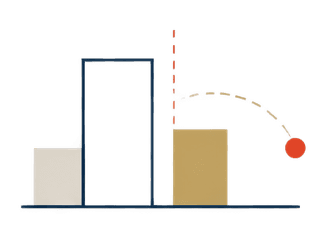
The Management Question
How much business can the operation actually handle, and how should managers deploy resources when demand exceeds capacity?
What is it?
Capacity defines what the operating system can deliver; resource planning decides how people, equipment, inventory, overtime, and outside capacity close the gap.
How does it work?
Predict the constraint -> calculate capacity -> test resource choices -> compare level, chase, and optimized plans.
Why does it matter?
Customers experience capacity decisions as waits, stockouts, service failures, cost increases, or reliable execution.
Two-session module
Start with the capacity discussion
Use Tuesday to find the constraint, then use Saturday's workbook lab to turn demand and capacity into a defensible resource plan.
Agenda - Week 04
Capacity fundamentals
Define capacity, measure it, and connect it to customer demand.
Demand vs. capacity
Explore what happens when demand peaks, capacity is fixed, or resources sit idle.
Constraints and bottlenecks
Identify the limiting step and decide where improvement actually changes throughput.
Capacity strategy
Compare long-term and short-term ways managers add, flex, or protect capacity.
Resource planning lab
Translate demand and capacity into workforce, equipment, inventory, and cost decisions.
Decision defense
Build a feasible plan, respond to uncertainty, and explain the tradeoff clearly.
Learning Objectives
After this week, you will be able to:
Explain the concept of capacity.
Describe how to compute and use capacity measures.
Identify bottlenecks and explain the Theory of Constraints.
Evaluate short-term and long-term capacity strategies.
Build basic capacity and aggregate-planning models in Excel.
Compare level, chase, and optimized resource plans.
Key Vocabulary6 terms - click to expand->
Capacity
The amount of work a resource, process, facility, or system can perform during a period of time.
Effective Capacity
The output that can reasonably be achieved under normal operating conditions.
Bottleneck
The required step with the lowest capacity; it limits total system throughput.
Theory of Constraints
A management logic for identifying, exploiting, subordinating to, elevating, and repeating around the constraint.
Level Production
An aggregate planning strategy that holds production stable and uses inventory to absorb demand changes.
Chase Demand
An aggregate planning strategy that adjusts output to match demand more closely.